- February 25, 2025
- Posted by: William BIRDWELL
- Categories: American culture, French culture
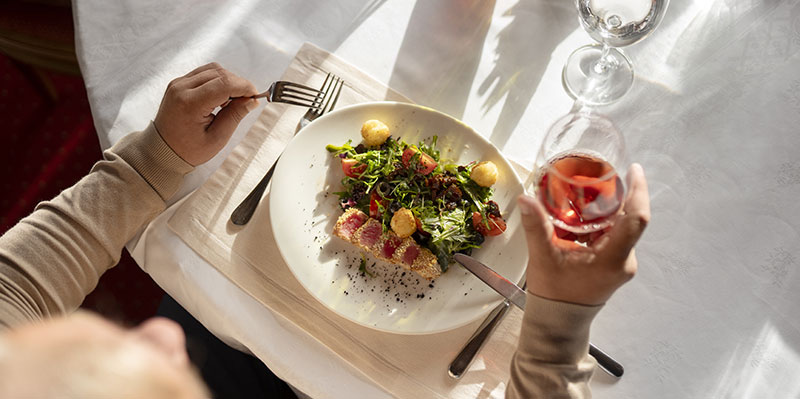
From “Bouchons de Lyon” to the Nashville BBQ Pit: A Culinary Journey Through French and American Tables
Writing this article fills me with both excitement and nervousness. While I deeply appreciate global cuisines, my true passion lies in French and Italian cooking. Though American by birth, I’ve called Lyon home for nearly 40 years. Over time, my love for cooking has flourished, alongside a fondness for dinner parties, French wines, vibrant farmers’ markets, bustling food halls, charming cafes, and, of course, Michelin-starred restaurants. I would argue that 70% of the French “Art de Vivre” is rooted in its culinary traditions. That said, I still enjoy a good burger, barbecue, clam chowder, and a visit to Katz’s in NYC.
Before settling in France, I spent extended periods in two of what I consider the worst countries for food—England and the Netherlands. My wife is of Spanish descent, so I’ve spent considerable time in Spain as well. While Spain boasts some great local dishes, I find its cuisine lacks the depth of French or Italian traditions. Of course, these are just my opinions, and I know many would disagree.
French cuisine has been my constant companion in integrating into this beautiful country—one I adore for its triumphs and flaws alike. Along the way, I’ve encountered incredible and, at times, disastrous home cooks. I’ve also had to navigate the deep-seated French belief that their cuisine reigns supreme. While I wholeheartedly agree with its exceptional quality, this superiority complex can make food discussions both passionate and tricky.
The American and French palates differ significantly. The French embrace a wider variety of flavors, using sauces to enhance rather than mask. The American palate leans toward bold, hot & spicy, fatty, and sweet flavors, often overpowering the ingredients themselves.
Though I could be labeled a ‘foodie,’ I prefer ‘Réfugié Gastronomique’—someone seeking refugee status from American food. Summarizing the impact of French cooking on my life in one article is impossible, but this is my personal exploration and a gift to our readers.
Charles Bukowski once said, “Find what you love and let it kill you.” This quote resonates deeply, especially after losing a dear friend, Jean-Jacques, to a sudden heart attack on Christmas Eve. He was trim, active, and one of the finest cooks I’ve ever met—a walking encyclopedia of French and Italian food. Through him and his lovely American wife, Koren, I truly grasped the French “Art de Vivre.” A successful dinner party isn’t just about excellent food; it’s about atmosphere, flowing conversation, and attention to detail. Jean-Jacques mastered this art, and I strive to replicate it in my own gatherings.
Historical Roots: Old World Refinement vs. New World Experimentation
French cuisine has long been synonymous with elegance and social prestige. Emerging from medieval aristocratic feasts and refined under Louis XIV’s lavish court, it became an art form governed by strict rules. A meal was more than sustenance; it was a statement of status.
In contrast, American cuisine evolved as a melting pot of influences—Indigenous agriculture, European settlers, and waves of immigrants. From Southern barbecue pits to the rise of fast food, American dining has always prioritized adaptability and innovation.
An unexpected bridge between these two culinary worlds was Thomas Jefferson. A devoted Francophile, he didn’t just bring democracy back from France—he imported macaroni and cheese, crème brûlée, and fine wines. He also popularized French-trained chefs (many of whom were enslaved individuals), leaving a lasting mark on early American fine dining.
Eating Habits: The Ritual vs. The Rush
In France, meals are sacred events. Lunch breaks are long, and dinners stretch into the night. A proper meal follows a three-course structure: entrée, plat principal, and dessert. Even workplace lunchtimes are protected traditions.
In contrast, Americans have mastered efficiency. Food is fuel. Industrialization and fast food have made eating increasingly informal and hurried. Drive-thrus, meal prepping, and snacking blur traditional mealtimes. While family dinners hold nostalgic value, they often compete with hectic schedules and takeout culture. With easy accessibility to fast food or snacks many Americans “graze”, eating or nibbling all day at home, in the office or while driving! Mealtimes are simply defined or set as “when you get hungry.”
Snacking is frowned upon in France, except for young children’s after-school “Goûter.” In the U.S., it’s an industry.
When we have American family or friends visit us in Lyon. I always pay attention to the time factor. I try to chose restaurants where we can get in and out quickly. At home I prepare meals that can be eaten under an hour.
State Dinners: Diplomatic Feasts
Both U.S. and French state dinners serve as grand diplomatic affairs, but their approaches differ. White House state dinners blend formality with informality, offering diverse cuisines and entertainment like live music and celebrity guests. Meanwhile, French state dinners at the Élysée Palace are steeped in tradition, with multi-course meals rooted in haute cuisine and a highly ceremonial atmosphere. While both celebrate diplomacy, the French approach remains more rigidly refined. I remember distinctly when French president Nicolas Sarkozy visited US president GW Bush at his Texas ranch the meal was burgers and hotdogs. Many French and the French diplomatic Corp were in a state of shock.
Cooking Traditions: Mastery vs. Reinvention
French cooking is an art of precision, built on technique and an almost religious respect for quality ingredients. Codified by culinary legends like Auguste Escoffier, it values expertise—there’s a “right way” to make Beef Bourguignon, and deviating is nearly sacrilegious.
American cuisine, by contrast, thrives on reinvention. From peanut butter and jelly sandwiches to sushi burritos, the U.S. excels at borrowing, adapting, and fusing flavors. Where French cuisine upholds refinement, American food culture embraces convenience and indulgence. (Deep-fried butter, anyone?)
Haute cuisine feels somewhat out of place in the U.S., where speed and accessibility often take precedence over formality. It caters to a niche clientele rather than mainstream dining culture.
Hosting: The "Art de Vivre" vs. The Casual Hangout
A French dinner party is a carefully orchestrated affair. Invitations go out in advance, guests arrive fashionably late (never before 8:00 pm), and the evening unfolds through multiple courses, flowing wine, and deep conversation. Bringing a dish? Unheard of. The host curates the experience, while guests express appreciation with typically wine or flowers.
American hospitality is far more relaxed. Potlucks, backyard barbecues, and game-day spreads dominate social gatherings. The concept of “bring a dish” is practically a given. While formal dinner parties exist, most American gatherings prioritize casual fun over structured etiquette.
I love American backyard barbecues—the simplicity, tasty foods, cold beer, and the easy conversations. They start and end early, often wrapping up before 8:00 pm. Meanwhile, the French are just beginning their apéritifs.
Conclusion: Two Worlds at the Table
The U.S. and France may sit at opposite ends of the culinary spectrum, but their relationship with food tells a fascinating story of history, culture, and evolution. The French uphold tradition with pride, while Americans continue to innovate and redefine dining. Yet, at their core, both cultures recognize that food is more than sustenance—it’s a ritual, a reflection of identity, and a way to connect.
Ultimately, food isn’t just about what you eat but how you eat it. It mirrors broader cultural dynamics: individualism vs. community, simplicity vs. practicality, change vs. tradition. Perhaps the true beauty of food lies not in choosing between refinement and reinvention but in celebrating both—sitting down together, sharing a meal, and savoring the experience.
I will always relish backyard barbecues, hot chicken wings, and hearty American breakfasts when I visit the U.S. But after a few weeks, I inevitably long for France—where eating is a balanced, shared experience, meant to be savored slowly.

Leave a Reply
Would your company like to organize an intercultural coaching session?
Latest blog posts
-

Managing Time as an Intracultural Challenge within Brazil
September 15, 2026 -
U.S.A. The monolingual superpower?
September 1, 2026 -

US vs France Vacation Culture: what we can learn in 2026
June 30, 2026 -

Accents: the music of humanity
June 9, 2026